Book a table
It has surely happened to you: you are in an incredible place, with a tray of spectacular nigiris in front of you, and suddenly you start to wonder. Do I pick it up with my hand? Do I use chopsticks? How much soy sauce is too much? Enjoying Japanese cuisine should not be a protocol exam, but knowing a couple of basic rules will not only make you look like an expert but will also make the flavor of each piece explode as it should on your palate.
Ultimately, knowing how to eat sushi is a matter of respect for the product and, above all, gastronomic common sense. Here we tell you how to elevate your experience the next time you visit us or order delivery.
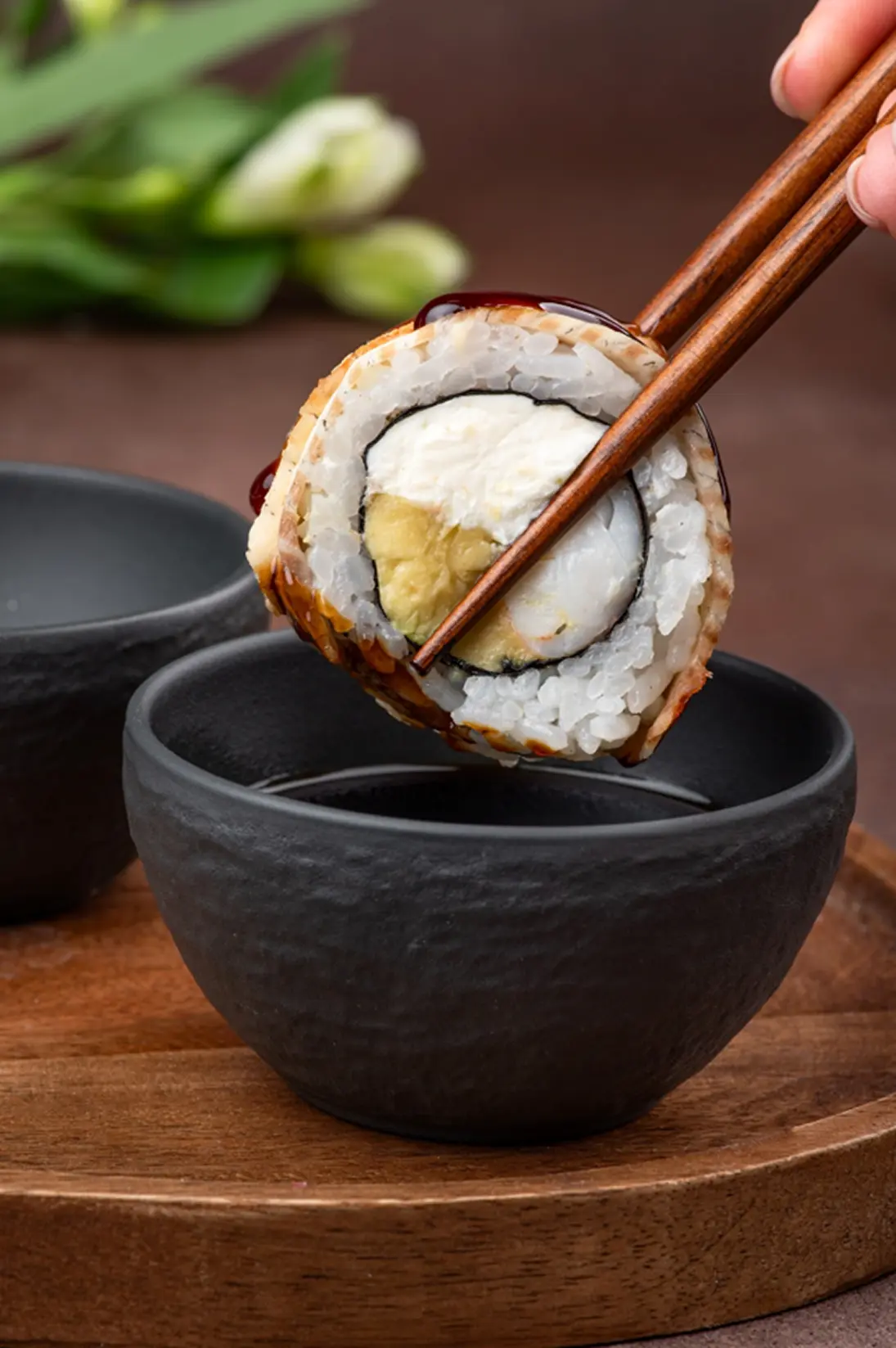
Let's break the first myth: it is not mandatory to have master-level skill with wood to enjoy this delicacy. In fact, in the most traditional Japanese cuisine, the nigiri was originally conceived as finger food. Using your fingers is not a lack of etiquette; on the contrary, it allows you to perceive the exact temperature and pressure of the rice (shari), preventing the structure from crumbling before reaching the palate.
However, the sophistication of an author's japanese restaurant in Madrid often invites the use of tools that maintain hygiene and elegance, especially with pieces like sashimi or more complex rolls. If you feel you still lack practice, you can always perfect your technique on how to hold chopsticks, a skill that will allow you to manage the pieces with surgical precision.
In the end, the key lies in comfort and respect for the product. Whether through tactile contact or with the help of chopsticks, the goal is to preserve the integrity of the piece. No one who understands the true culture of quality sushi in Madrid will judge you for using your hands; what really matters is that the form plate to palate is clean and harmonious, allowing the flavors to express themselves without interference.
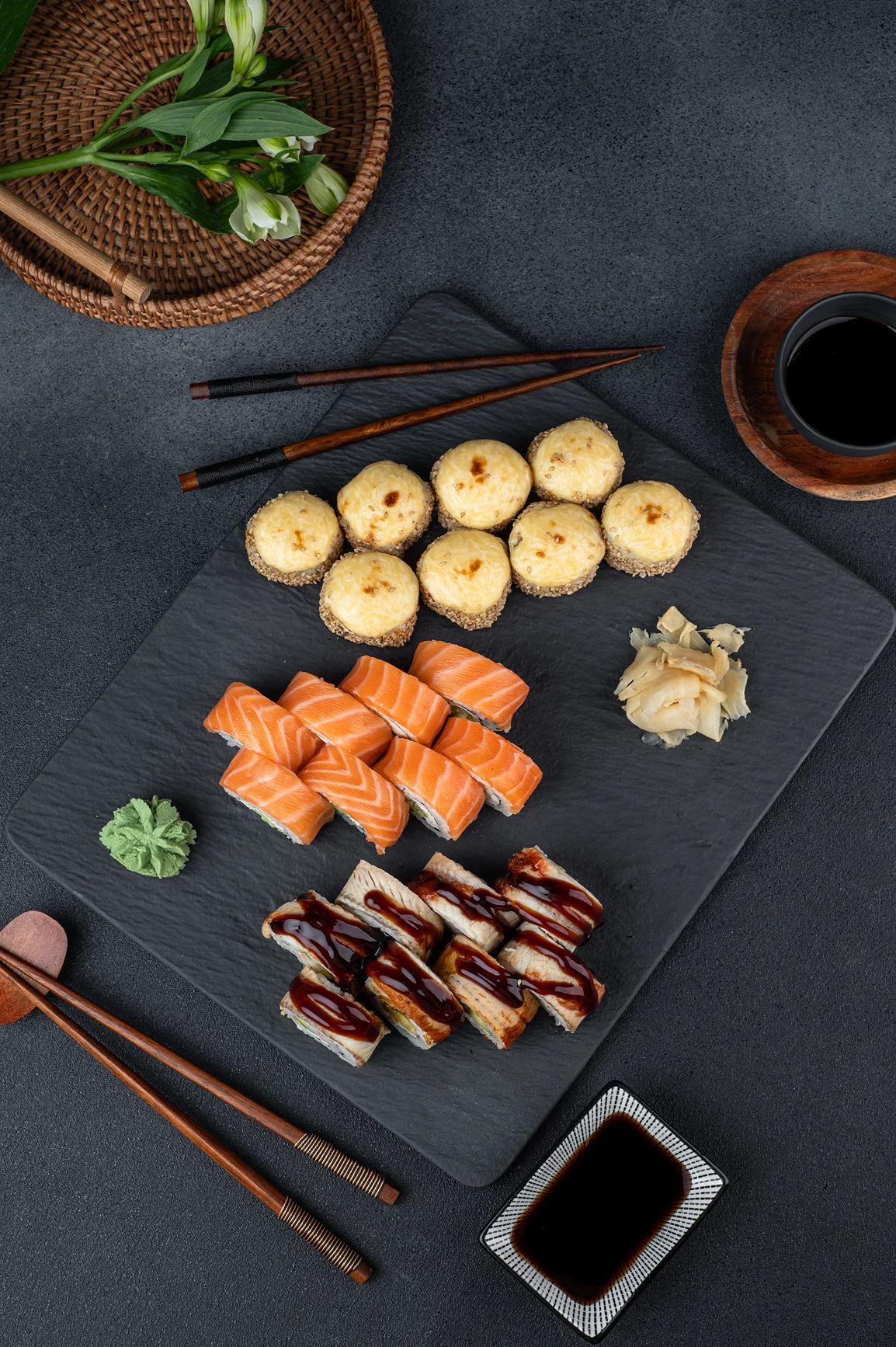
This is where most of us tend to commit culinary "crimes" without realizing it. Sushi is balanced, and the side dishes are there to enhance, not to bury the flavor of the fish.
Respecting these small rituals is not a matter of rigid etiquette, but pure sensory logic to avoid masking the quality of the raw material. Japanese cuisine is based on subtlety: understanding that each element has its technical function is what differentiates a quick dinner from a true experience at a top-level Japanese restaurant in Madrid. Mastering the use of sides is the definitive step to enjoy all the nuances offered by author sushi in madrid.
The sequence of tasting in Japanese cuisine is not a matter of arbitrary etiquette, but of taste engineering. To avoid saturating the taste buds, the technical protocol dictates always starting with the leanest and subtlest profiles, such as white fish (sea bass or snapper), whose delicacy would be eclipsed by more intense flavors. This progression allows the palate to appreciate the clean texture of the rice and the cut of the fish before moving on to pieces with a higher richer, fattier fish, such as salmon or bluefin tuna.
The highlight of your meal in a high-level Japanese restaurant in Madrid should be reserved for bites with complex aromatic profiles or powerful fats. Flamed pieces, braised eel, or those that integrate sweeter and spicier ingredients should close the session. Following this logical order prevents the power of an unagi sauce or a touch of toasted sesame from canceling out the fragility of the premium pieces, ensuring that every bite of author sushi in Madrid maintains its sensory integrity from start to finish.
In our space, we like the experience to be complete, and that is why we always recommend a couple of details that make a difference:
Knowing how to eat sushi is not a matter of rigid labels, but of maximizing pleasure. At the end of the day, what we seek at every table is for time to stop a bit while you enjoy the best quality. So, whether with chopsticks or with your fingers, enjoy the feast!