Book a table
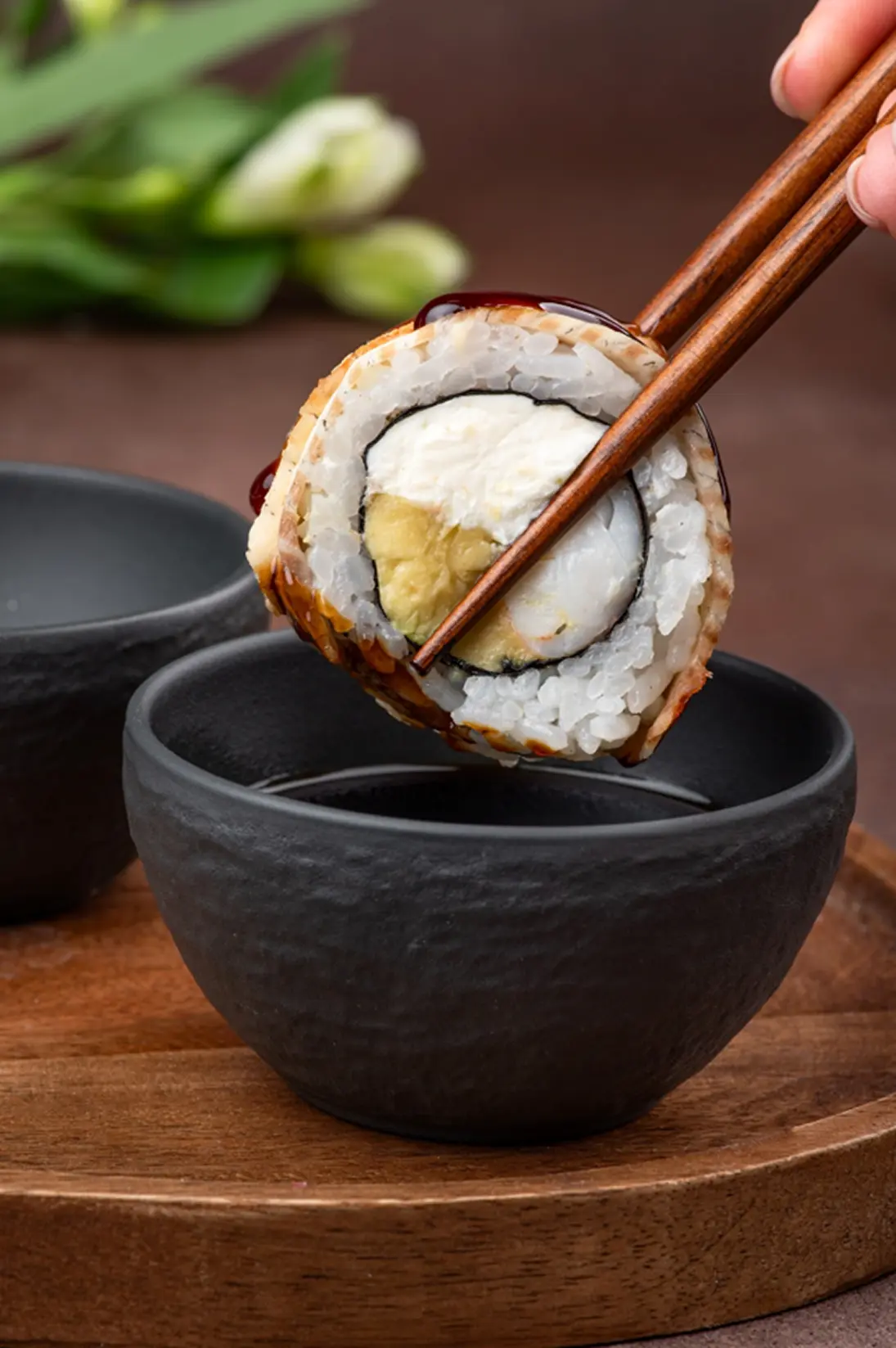
Have you ever stared blankly at those two pieces of wood in a Japanese restaurant Madrid while everyone around you looks like an expert? Don't worry, you're not the only one who has felt the temptation to sneakily ask for a fork. The truth is mastering "hashi" (their real name) is more a matter of skill than brute force.

Although today we associate them directly with enjoying good sushi in Madrid, the truth is that these tools have more than 3,000 years of history. They were born in ancient China, not for eating, but as kitchen utensils to stir the fire or serve food from boiling pots. It was later that they became the extension of our hand at the table. A curious fact: it is said that Confucius influenced their popular use, as he considered that knives reminded people of weapons and the act of eating should be a moment of peace, not war.
The most common mistake when trying to learn how to hold chopsticks is squeezing them as if your life depended on it. If your fingers are white from the pressure, your maki will go flying through the air. The key to Japanese cuisine and its etiquette is smoothness.
To start, think of one chopstick as the "foundation" (the one that doesn't move) and the other is the "operator" (the one that does all the heavy lifting).
.webp)
If you want to know how to use chopsticks without looking like a complete amateur, follow this simple mental outline:
Quick position outline:
Mastering this technique is, in reality, a matter of muscle memory and delicacy, not strength. Once you realize that the secret is in the immobility of the lower chopstick, Japanese cuisine stops being a logistical challenge and becomes a fluid pleasure. Practicing calmly in a trusted restaurant in Madrid is the final step for your hands to move with the same harmony as the flavors of good sushi.
Knowing how to hold chopsticks is only half the battle; the other half is style. In Asian culture, there are certain unwritten rules that will make you pass for a true connoisseur:
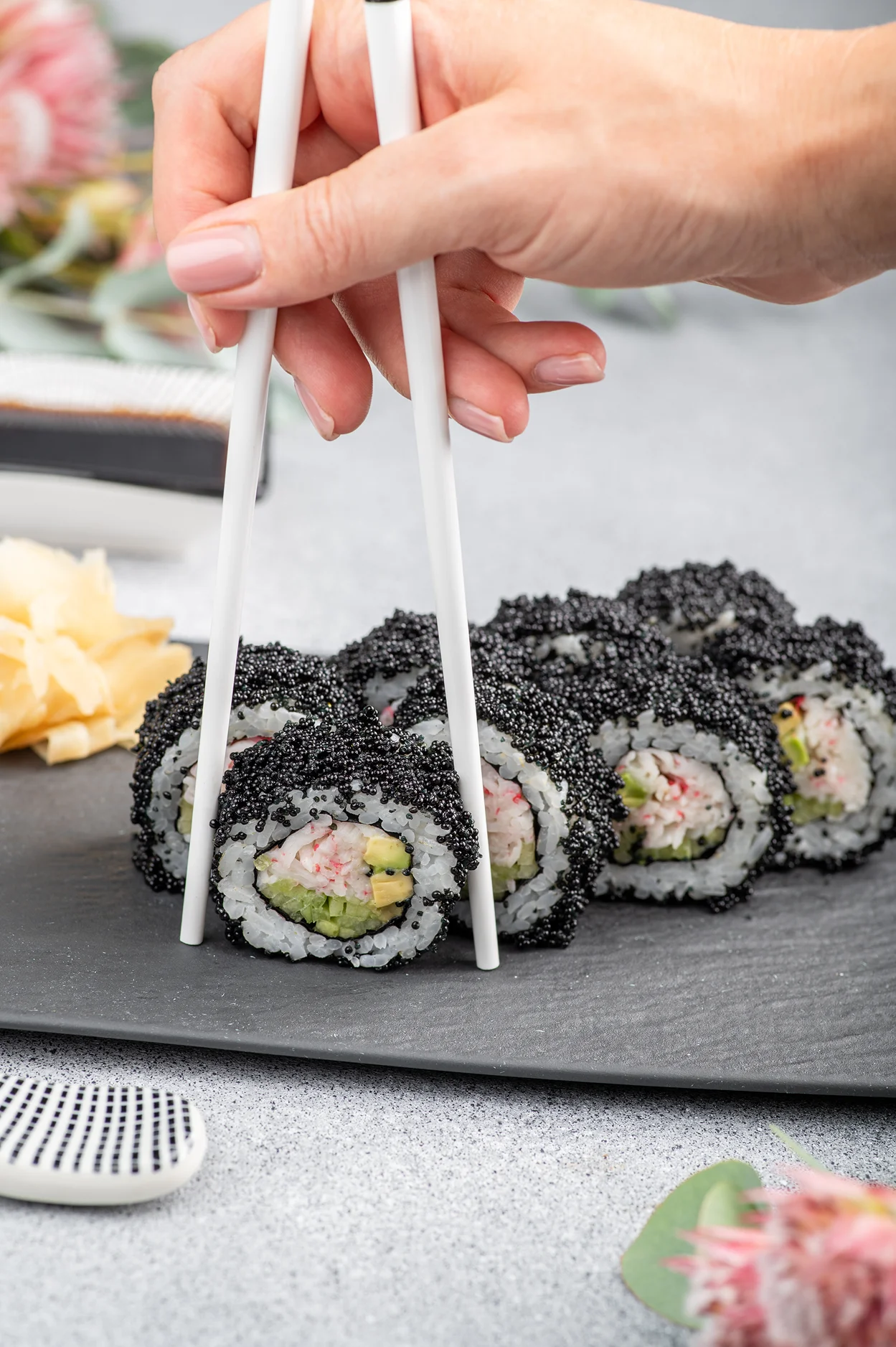
If you are in the city center enjoying the best sushi in Madrid, remember that practicing with large pieces like California Rolls is easier than starting with loose grains of rice or slippery sashimi.
At first, it may seem like a lost battle, but understanding how to hold chopsticks radically transforms your sensory experience at the table. Unlike metal cutlery, wood or bamboo are neutral materials that do not interfere with the delicate chemical balance of food, allowing the flavor of the fish and the rice seasoning to reach the palate without metallic alterations.
Additionally, this method imposes a much more relaxed and conscious pace of tasting. By capturing individual pieces, you force yourself to savor every nuance of Japanese cuisine with the calm that its preparation deserves. Let's be honest: beyond etiquette, there is an almost therapeutic satisfaction in mastering the precision needed to catch that last grain of rice or an edamame pod without it sliding across the table. It is, in short, the final step to truly connect with the philosophy of good sushi in Madrid.
Even when you think you've mastered how to eat with chopsticks, it's easy to fall into bad habits. Avoid crossing the sticks in an "X" shape; if that happens, it means you are applying pressure from the wrong angle. The sticks should always travel in parallel. Also, don't use them to point at someone while talking or leave them stuck vertically in the rice bowl, as in many Asian cultures, this is associated with funeral rituals.
Ready for action? Don't wait for a gala dinner to practice. Tomorrow, when you decide what to have for dinner, look for that Japanese restaurant Madrid you like so much and ask for chopsticks. The only real way to learn is by failing a few times until, suddenly, your fingers find the natural rhythm.
Mastering the art of chopsticks won't take years, just a couple of sushi trays and a little bit of attitude. Enjoy your meal!