Book a table
If you have ever wondered what sushi tastes like for real, the short answer is that it should not taste like "raw fish." The organoleptic profile of an excellent piece is a symphony of contrasts: the subtle sweetness of short-grain rice, the pungent hint of rice vinegar (su), and the oceanic freshness of a cut executed with surgical precision. In a market saturated with convenience options and industrial trays, it is easy to lose your sensory compass and settle for products that mimic the aesthetic but ignore the technique.
Recognizing excellence does not require a critic's palate, but rather the ability to sharpen the senses and decode the signals the dish emits from the first visual contact. True mastery manifests in balance, where no ingredient fights for the spotlight, but all collaborate to elevate the raw material.
The gustatory core of Japanese cuisine revolves around umami, that fifth taste that generates deep salivation and binds the rest of the elements together. When tasting a high-end nigiri, the experience begins with the creaminess of a protein that melts upon contact with the palate, followed immediately by the firm yet airy structure of the rice (shari).
A common diagnostic error is accepting a compact or excessively refrigerated rice base. Technically, rice should be served at a temperature close to body temperature (about 36°C), creating a fascinating thermal contrast with the fresh fish. If the predominant impact is that of soy sauce or the heat of wasabi, the balance of the bite is off: condiments are escorts designed to highlight the flavor, never to hijack it. Ultimately, good sushi is defined by a harmony where the aftertaste is clean, balanced, and persistently marine.
Not everything that shines under the minimalism of a Japanese restaurant Madrid is excellence. There are critical indicators, true "red flags," that should activate your guard before the first bite:
Identifying these flaws not only protects your gastronomic experience but also educates your palate to demand the standard that such a rigorous gastronomy deserves. A place that neglects these basic pillars will hardly be able to offer an authentic experience.
.webp)
In a city with an offer as dense as sushi in Madrid, the distinction lies in details that escape the untrained eye. A professional itamae (sushi master) never prepares pieces in advance to store them in display cases; made-to-order preparation is an absolute must to preserve the chain of textures.
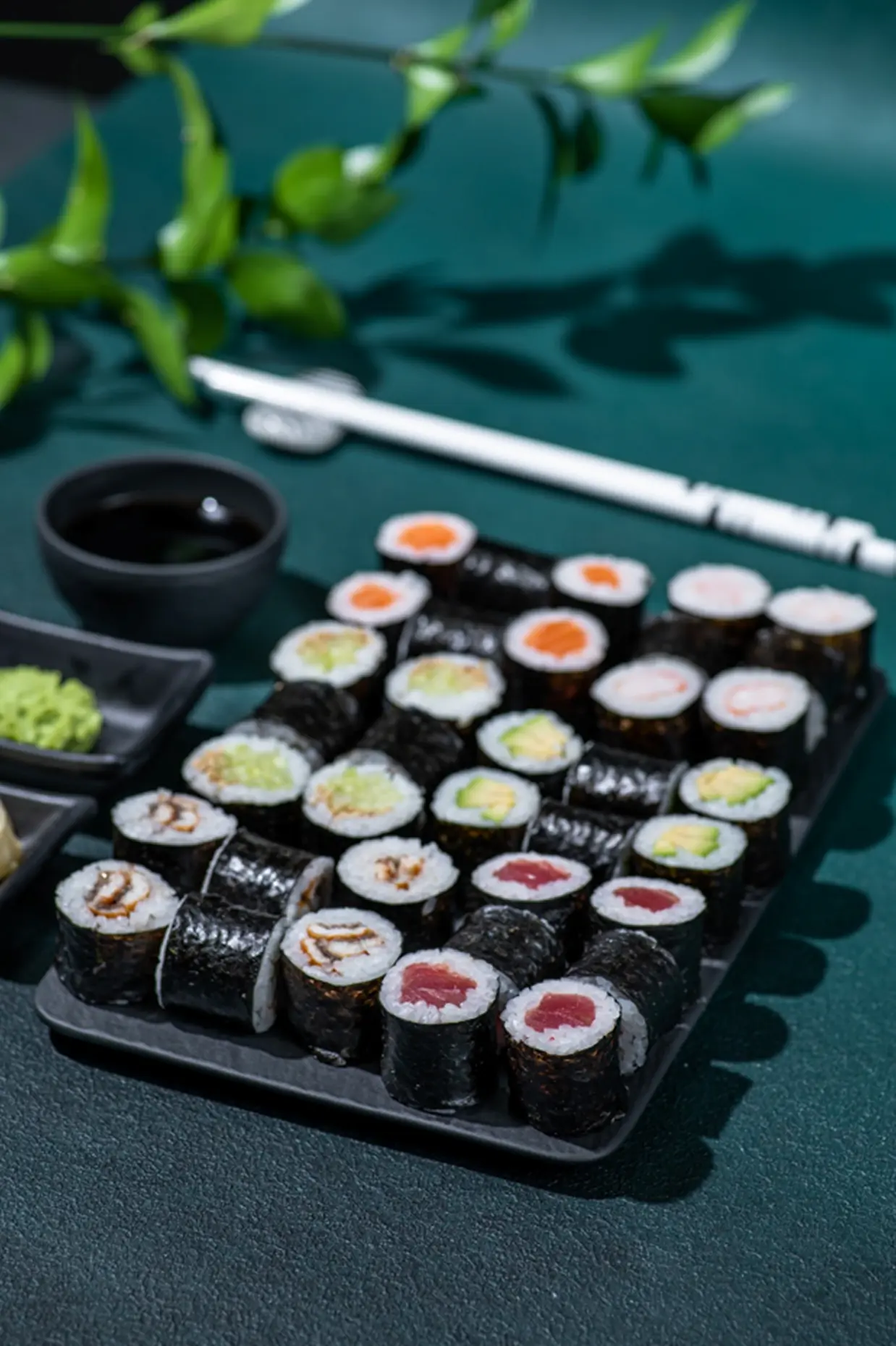
An infallible indicator of freshness is the state of the nori seaweed: in a quality piece, the seaweed must retain a crunchy and brittle point. If when biting a maki you notice a leathery or gum-like texture, it is a sign that the seaweed has absorbed moisture from the rice due to excess waiting time. This technical immediacy is, possibly, the most valuable and complex component to replicate in Oriental cooking, marking the boundary between an average meal and an ephemeral work of art.
When you visit an establishment that pays homage to tradition, you will notice absolute aesthetic and gustatory coherence. The systematic use of heavy sauces (such as eel or teriyaki) is usually a resource to mask deficiencies in the freshness of the fish. True quality needs no gimmicks; it is demonstrated in sashimi, where there is no room for deception: only the edge of the knife and the purity of the animal.
The balance between the thickness of the slice (neta) and the proportion of rice is what separates a craftsman from an amateur. In a premium piece, the fish should subtly wrap around the rice, creating a unit that melts uniformly in the mouth. This technical precision ensures that each ingredient fulfills its function without saturating the palate, allowing a fluid transition between the different courses of the menu.
To truly discover what sushi tastes like at its zenith, it is advisable to start the progression with minimalist pieces. Before exploring rolls with multiple ingredients or fried finishes, request a tuna belly (toro) or wild sea bass nigiri. Let the sharp, honest flavor of the sea tell the story of how that product was selected and treated under the strictest standards.
Ultimately, true quality is found in the details. The next time you step into a top-tier Japanese spot or a premier shisha bar in Madrid, look beyond just satisfying a craving. Notice the natural sheen of the fish, the subtle warmth of the rice, and let your instincts take over.
Excellence doesn't need a sales pitch; it hits you the moment you take that first bite or settle into the atmosphere. It's those small, precise touches that turn a standard night out into something that actually sticks with you.